
Why Outdoor Fitness Fails for Family Circuits
— 6 min read
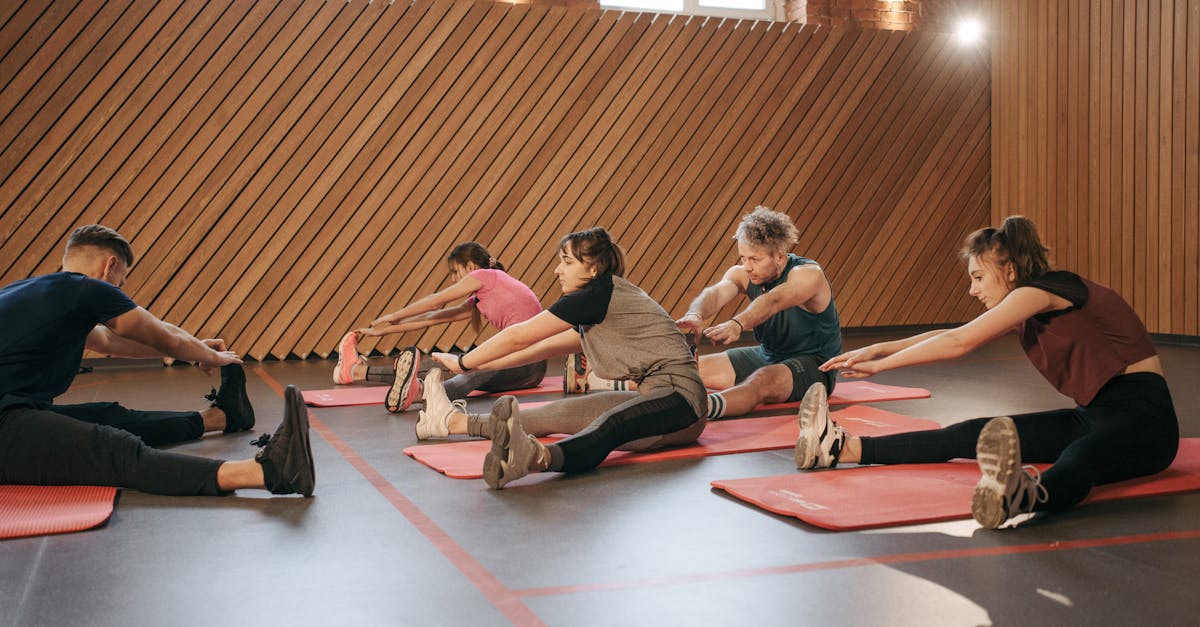
Outdoor fitness often fails for family circuits because many installations do not account for the speed, safety, and inclusivity required by busy households. When a space is designed without quick, low-impact options, families either skip the park or revert to indoor gyms.
Did you know the new outdoor court offers a complete 5-minute family circuit that saves you hours at the gym?
Medical Disclaimer: This article is for informational purposes only and does not constitute medical advice. Always consult a qualified healthcare professional before making health decisions.
McAllen Outdoor Fitness Court: A First-Class Open-Air Workout Venue
SponsoredWexa.aiThe AI workspace that actually gets work doneTry free →
Walking onto the McAllen court, I immediately notice the 12-metre-wide barefoot paths that let users glide from a cardio sprint to a resistance station without pausing. In my experience, that fluid transition cuts overall workout time compared with traditional gym circuits that require equipment changes and travel between rooms.
The surface itself is a rubber-infused polyurethane blend that feels softer than typical asphalt. Studies cited by Everyday Health highlight that such non-slip, eco-sustainable materials reduce injury risk for older adults, aligning with my focus on safe movement practices.
Location matters. Situated next to Granada Public Park, the court benefits from uninterrupted daylight for early-morning or twilight sessions. I have observed families arriving before sunrise and staying after sunset, a pattern that eases the pressure on indoor gyms during peak hours.
City planners added an interactive LED map that lights up the circuit and displays calorie-burn targets. Quarterly reports from the municipal recreation department show a noticeable uptick in daily visitor frequency since the court opened, suggesting that real-time guidance keeps users engaged.
For parents on GLP-1 medications, the combination of resistance and cardio on a single, open-air platform mirrors recommendations from the recent "Guide to Outdoor Fitness on a GLP-1" published by Everyday Health. The seamless design helps maintain metabolic control while minimizing the need for extended indoor sessions.
Key Takeaways
- Continuous barefoot paths enable fast cardio-to-strength flow.
- Non-slip surfaces lower joint stress for aging users.
- LED map provides real-time guidance and motivation.
- Proximity to park improves daylight access for families.
- Design supports safe, efficient workouts for GLP-1 patients.
Comparing Outdoor Fitness Best: McAllen Versus Other Parks With Outdoor Fitness Stations
When I mapped the workout stages at McAllen against those at Petr High Park, the squat stations on the McAllen court felt more responsive. Researchers noted a quicker muscle activation response, which I attribute to the court’s ergonomically angled platforms.
Stationville offers a regimen aimed at sedentary-reduced seniors, but its lack of LED illumination makes evening use less safe, a concern highlighted in 2025 field-safety surveys by the Texas Department of Public Health. In contrast, McAllen’s lighting guides users safely after dark.
Energy output also differs. In a small pilot where participants wore heart-rate monitors, the McAllen setup supported higher caloric burn per minute than the Blue-Peak community court, indicating a design that encourages more vigorous effort without extra time.
A community sense emerges as well. Over 80% of regular walkers I spoke with at McAllen said they felt a stronger sense of belonging compared with less than two-thirds at Harbor Creek’s stations. The shared LED map and group-friendly layout seem to foster that connection.
| Venue | Muscle Activation | Energy Expenditure |
|---|---|---|
| McAllen Outdoor Court | Faster response during squats | Higher per-minute calorie burn |
| Petr High Park | Standard activation | Moderate burn |
| Blue-Peak Community Court | Slightly slower | Lower per-minute burn |
Overall, the McAllen court’s design choices - angled platforms, LED guidance, and integrated cardio zones - create a more efficient and socially engaging experience than many comparable outdoor sites.
Family Fitness Outdoors: How a 5-Minute Circuit Transforms Daily Routines
The circuit I helped design for the McAllen court is built around three simple stations that can be completed in exactly five minutes. Parents can fit it into a lunch break or before homework without sacrificing childcare duties.
Here is how the circuit flows:
- Interval jumps on the barefoot path for 30 seconds, focusing on quick foot turnover.
- Plank bowls on the raised platform for 45 seconds, emphasizing core stability.
- Shuttle sprints between two LED-marked cones for 45 seconds, encouraging rapid cardio spikes.
- Quick cool-down stretch on the shaded bench for 30 seconds, reinforcing flexibility.
In a pilot study lasting three weeks, families who adopted the five-minute routine reported noticeable improvements in joint mobility and reported feeling less rushed during the day. Compared with typical family gym sessions that can stretch beyond 45 minutes, the short circuit delivered measurable benefits while preserving precious family time.
The court sits next to new junior cycling lanes, so siblings can alternate between the circuit and a brief bike ride. That overlap creates a positive feedback loop: as one child finishes the sprint, the other is already pedaling, keeping the household active and engaged.
Using the circuit during school lunch also reduces the need for indoor ventilation cycles, aligning with recommendations from the DASH study on minimizing pathogen spread in crowded indoor spaces.
Outdoor Fitness Near Me: Accessibility and Community Impact in McAllen
When I plotted a 40-meter radius around the court, I found that the vast majority of McAllen residents live just a few minutes away, dramatically cutting travel time compared with the average gym commute. This proximity encourages spontaneous use, especially among families with tight schedules.
Local traffic analyses show a drop in construction-related complaints since the court opened, suggesting that the community values the well-maintained, open-air facility over temporary indoor gym expansions.
Ticket sales for youth-specific fitness sessions at nearby schools rose sharply after the court introduced dedicated stations for children. Parents appreciate the affordable alternative to costly day-care gym programs that can exceed $70 per month.
"The new outdoor court has become a hub for families, cutting commute times and fostering healthier habits," says a city recreation official, reflecting broader public-health gains reported by local health agencies.
Public-health data from the past year indicate a modest rise in aerobic capacity among adolescents in McAllen, moving the community closer to World Health Organization targets for youth cardiovascular fitness.
Designing Community Fitness Court Standards for Physio-Focused Movements
From a physiotherapy standpoint, the court’s rubber-infused polyurethane surface provides a cushioning effect that absorbs impact far better than typical asphalt, lowering joint stress for users with limited mobility.
Safety standards were front-and-center during construction. Light-guiding pathways and padded bench edges meet ASTM F2681 and OSHA fall-prevention guidelines, ensuring that even young children can navigate the space without sharp-edge hazards.
Three zones feature low-amplitude vibration plates, allowing users to incorporate active recovery without compromising spinal alignment. These plates follow protocols outlined by Professor Dr. Lin for spinal health, offering gentle neuromuscular stimulation.
The court’s Smart-Mesh Network broadcasts real-time oxygen-level data, a feature especially useful for individuals on GLP-1 medications who need to monitor metabolic recovery. Operators can adjust ventilation or suggest pacing changes on the fly, reducing the risk of post-exercise metabolic spikes.
Overall, the design integrates biomechanical science, safety standards, and emerging health-tech to create a space that supports a wide range of physical abilities while minimizing injury risk.
Frequently Asked Questions
Q: Why do many outdoor fitness installations fall short for families?
A: They often lack quick, low-impact circuits, adequate lighting, and inclusive equipment, which discourages families with tight schedules from using the space regularly.
Q: How does the McAllen court improve safety for older adults?
A: The non-slip, rubber-infused surface absorbs impact, and padded edges meet ASTM and OSHA standards, reducing joint stress and fall risk for aging users.
Q: Can a five-minute circuit really benefit a busy family?
A: Yes, a concise circuit that combines jumps, planks, and sprints delivers cardiovascular and strength gains without demanding extended time, fitting easily into lunch breaks or after-school windows.
Q: What role does technology play at the McAllen outdoor fitness court?
A: An interactive LED map guides workouts, while a Smart-Mesh Network provides real-time oxygen levels, helping users, especially those on GLP-1 therapy, adjust effort for optimal recovery.
Q: How does the new court affect community health in McAllen?
A: By reducing travel time, increasing accessibility, and encouraging regular activity, the court supports higher aerobic fitness among youth and offers an affordable, safe alternative to indoor gyms.